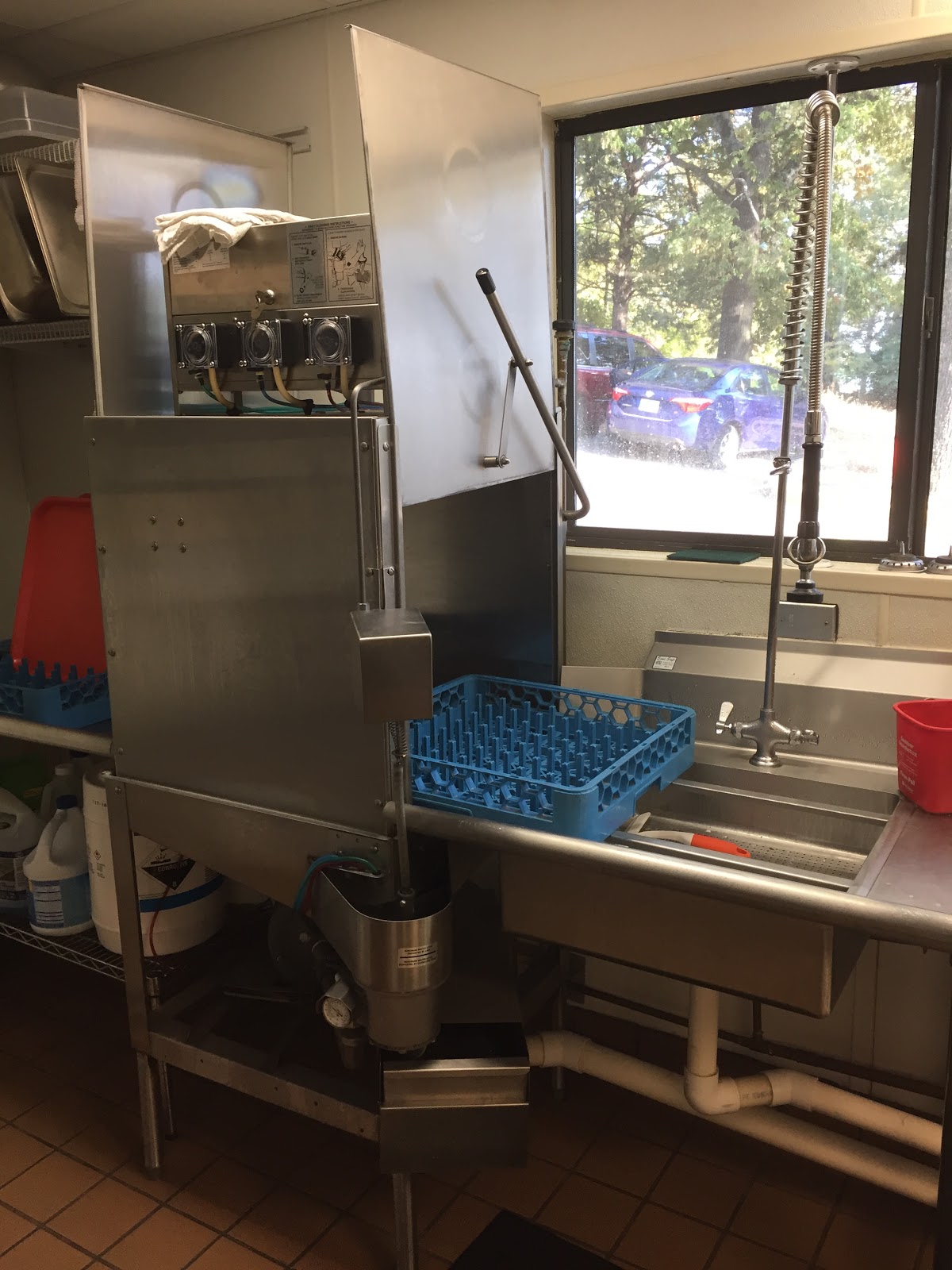
Here is our simple technique: Wash dishes with HOT water, soak dishes in COLD water.
Why do we do it this way? (Read
DISHWASHER USE first!)
- Sometimes the hot water seems to be limited from the water heater tank and our dishwasher does not have an internal water heater so in essence we need all the hot water for it to run and clean its best.
- Most pots and pans do not require hot water to soak and remove stuck on food
- If a pot/pan/dish is extremely greasing but not really dirty we then use the Soap Water (again that Dawn dish detergent cuts grease the best) and hot water to remove the grease or greasiness. But if it needs to soak we can still use the cold water before scrubbing with the hot.
The key to this system is because most starch and protein based foods absorb the water and loosen up over time with faucet temperature water. Hot water tends to re-activate, tighten up, or otherwise continue to cook food in the dish making it even harder to release from the dish.
Even sugar based sauces or food that is soaked with cold water will eventually, given time, absorb the water and loosen its grip. We hardly ever have one dish that JUST has to be washed right away to be used again.
Give it time, let it soak. Don't work hard scrubbing dishes when its not necessary.
Another technique we use is spraying a dish down right away even if we are not going to clean it. This helps keep leftover food and liquid from getting a chance to dry on and make it harder to clean. When you carry a dish over that looks like its going to be hard to clean, spray it quickly, and then leave in sink. DO this when the dish doesn't necessarily need to soak.
The following are a few examples:
Macaroni & Cheese (shells) - fill with cold water.
BBQ Chicken baked with sauce in it. Fill with cold water.
Another view...See the crusty black stuck on residue on sides of pan?
Here both pans have soaked about 15 to 20 minutes.
Cheese and starch sprays off with ease with hand sprayer before using dishwasher.
Crusty black stuck on residue burnt to the sides...
Now wipe of with one swipe of the soapy green pad.
Both wash off quickly and are run through the dishwasher. No need to stand there a long time trying to scrub hard with a more abrasive cleaner.
Sometimes cooking starchy things like potatoes, pasta, and rice can be a hassle to get out of the pans BUT if you don't need to get it out of the pan right away then just cover it and put it into refrigerator and clean it out the next day. The starches then get cold and clump together (to their-self) instead of to the pan and make it easy to clean them out of a pan. Example below.
I just pulled this pan out of the refrigerator after sitting overnight. The day before the rice was HOT and sticking very hard to the pan.
The rice is now stiff and mostly just stuck to itself.
I use my gloved hand to quickly scrape the rice out and clean the pan. This is what it left to clean. Not much.
And you can still spray or soak this pan with some cold water and let it sit a few minutes and clean it out quickly for the dishwasher.
Dried baked on mashed potato...
Cold water...
Maybe 10 minutes? Everything has loosened up!
This CLEAN after just a quick spray...
Finish up with soft green pad and Soap Water and run it through the dishwasher.
This concludes our illustrations. The technique works!